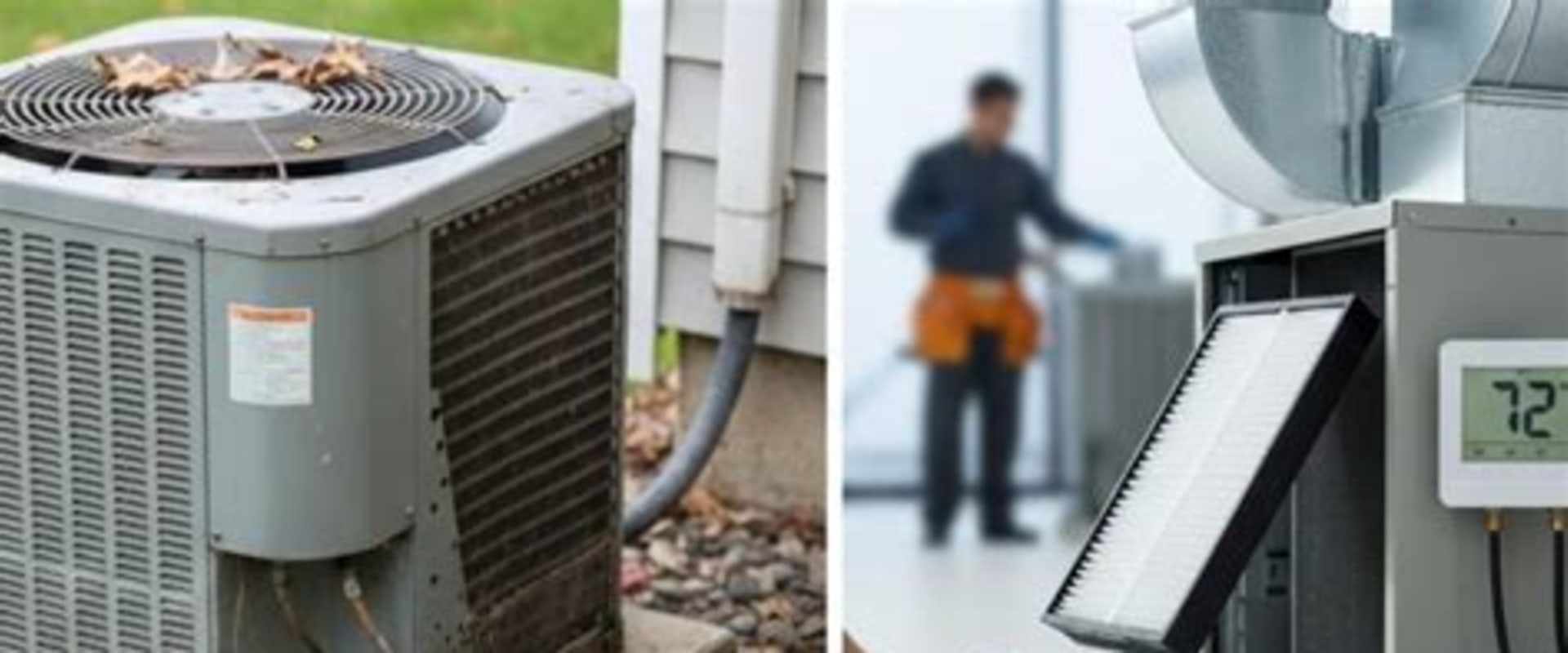
Short answer: yes — but not for the reason most homeowners expect.
Most Altamonte Springs homeowners schedule a tune-up to protect equipment and manage energy costs. What we've learned from years of service calls throughout Seminole County is that a properly performed tune-up delivers something the thermostat never shows: a measurable improvement in the air your family breathes every single day.
Your HVAC system isn't just a cooling machine. In this climate, it's the primary filter, circulator, and humidity manager for every room in your home — running nearly year-round without a real break. When it's clean and calibrated, it handles that responsibility well. When it isn't, we see the same pattern repeat across Altamonte Springs homes:
Humidity that never feels fully under control despite the AC running constantly
Dust returning to surfaces faster than it should
Musty odors that cleaning doesn't resolve
Allergy and respiratory symptoms that are worse indoors than outside
Here's the part most HVAC content doesn't say directly: those aren't comfort complaints. In Central Florida's climate, they're air quality symptoms — and they trace back to equipment that needed attention before peak season, not during it.
This page explains why a properly performed tune-up is essential for protecting indoor air quality, maximizing efficiency, and extending system life — and why choosing a top HVAC system tune up near Altamonte Springs FL should be a priority for homeowners who want lasting comfort and performance, not just a quick inspection.
TL;DR Quick Answers
Does an HVAC Tune-Up Improve Air Quality in My Altamonte Springs Home?
Yes — and in Central Florida's climate, the air quality impact is often more significant than the energy savings most homeowners expect.
What a top-quality tune-up directly improves in this climate:
Coil cleaning removes biological growth circulated into living spaces with every operating cycle
Drain line clearing eliminates standing water conditions driving mold and microbial growth
Filter assessment corrects bypass conditions depositing contaminants directly on the coil
Blower cleaning removes accumulated contamination distributed through every room
Humidity verification confirms the system maintains the below-50% threshold essential for mold and dust mite prevention
Why Altamonte Springs is different from every national guideline you'll read:
Systems run 10 to 11 months per year continuously
Central Florida humidity accelerates biological growth on coil surfaces faster than seasonal climates
Drain lines face continuous condensation loads with no seasonal recovery period
Indoor air quality degradation happens gradually — families attribute symptoms to seasonal allergies until we show them what's on the coil
What the EPA and CDC document that most homeowners don't know:
Americans spend approximately 90% of their time indoors
Indoor pollutant concentrations are often 2 to 5 times higher than outdoors
Building dampness and mold are directly linked to asthma, bronchitis, and respiratory infections
Your HVAC system is the primary mechanism determining which direction those numbers move in your home
What separates a top HVAC tune-up provider in this market:
Coil cleaning included as standard scope — never an add-on
Drain line inspected and cleared on every visit
Written checklist provided before arrival
Guaranteed pricing confirmed before anyone enters your home
NATE certification and Florida DBPR license verified without hesitation
Bottom line: In Altamonte Springs, a properly performed tune-up from a verified, credentialed provider isn't just an equipment service. It's the most direct intervention available for the air your family breathes in a climate that gives your system — and everything living on its components — no real break from February through December.
Top Takeaways
Your HVAC system is your home's primary air quality tool — not just its cooling system.
Runs 10 to 11 months per year in Altamonte Springs
Manages dust, pollen, mold spores, humidity, and airborne particulates continuously
A tune-up is the most direct air quality intervention available in this climate
What the thermostat measures and what your family breathes are two different things
The air quality consequences of deferred maintenance are gradual, invisible, and easy to misattribute.
Families attribute indoor symptoms to seasonal allergies — not their equipment
We find coil and drain line conditions that explain every complaint in homes that appear normal
The system is still cooling — nobody knows anything is wrong
A tune-up reveals what the thermostat never shows
Central Florida's humidity creates biological growth conditions national guidelines don't account for.
Coil surfaces accumulate mold and microbial growth faster in persistent humidity
Drain lines face continuous condensation with no seasonal recovery period
Filters exceed effective service life faster than manufacturer intervals suggest
Serviced in February: system enters peak season prepared
Not serviced: system enters peak season already compromised
Indoor air is often 2 to 5 times more polluted than outdoor air — your HVAC system determines which direction that moves.
EPA documents the indoor pollutant concentration range most homeowners never consider
A clean, calibrated system actively reduces what circulates indoors
A neglected system actively distributes it
In a Central Florida home, your family spends the majority of their time inside that environment
Providers who understand the air quality dimension of a tune-up demonstrate it in specific, observable ways.
Coil cleaning included as standard scope — not an add-on
Drain line inspected and cleared on every visit
Filter condition, fit, and MERV rating assessed — not just whether a filter is present
Humidity performance verified and documented
Findings communicated in terms of your family's indoor environment — not just equipment efficiency
Most homeowners think of their HVAC system as a temperature machine. In Altamonte Springs, that framing undersells what the equipment actually does — and understates what happens when it isn't properly maintained.
Your system moves air continuously. Every hour it operates, it pulls return air through a filter, conditions it, and redistributes it throughout your home. In a climate where that cycle runs 10 to 11 months per year, the system isn't just managing temperature. It's managing everything that travels in that air — dust, pollen, mold spores, humidity, and airborne particulates that affect how your family feels every day.
When the system is clean and calibrated, that process works the way it was designed to. When it isn't, the air quality consequences are real — and they compound with every operating hour.
What a Tune-Up Actually Addresses — and Why It Matters for Indoor Air Quality
A properly performed tune-up doesn't just extend equipment life. In Central Florida homes, it directly targets the components most responsible for indoor air quality degradation:
Evaporator Coil Cleaning The evaporator coil is where your system removes heat and humidity from indoor air. In Altamonte Springs, humidity loads are relentless. A coil that hasn't been cleaned accumulates biological growth — mold, mildew, and bacteria — that gets distributed into your living space every time the system runs. Coil cleaning isn't a maintenance box to check. It's the single most direct air quality intervention a tune-up provides.
Drain Line Clearing Your system produces condensation continuously in this climate. A partially blocked drain line creates standing water inside the air handler — the exact conditions mold and mildew need to establish and spread. We find partial blockages on a significant percentage of Altamonte Springs service calls, often in systems that appear to be running normally. Clear drain lines protect both your equipment and the air it conditions.
Filter Assessment and Airflow Correction A clogged or incorrectly rated filter doesn't just restrict airflow — it allows contaminants to bypass filtration entirely and deposit directly on the evaporator coil. Our technicians assess filter condition, fit, and MERV rating during every tune-up because the filter is the first line of defense in your home's air quality system. Getting it wrong negates everything else the system does correctly.
Blower Component Cleaning The blower is responsible for moving conditioned air through every room in your home. Contaminated blower components distribute whatever has accumulated on them into your living space with every cycle. In a system that runs year-round, blower buildup is a consistent finding — and a consistent air quality risk when it goes unaddressed.
Humidity Verification Central Florida's humidity isn't just a comfort issue. Sustained indoor relative humidity above 60% creates the conditions mold and dust mites need to thrive. A properly calibrated system maintains humidity control as a byproduct of correct operation. A system running outside its designed parameters — with low refrigerant, restricted airflow, or a dirty coil — loses that humidity control quietly and gradually. Verifying system performance during a tune-up is how we catch humidity drift before it becomes an air quality problem.
Why Altamonte Springs Homes Face Higher Air Quality Risk Than the National Average Suggests
Standard HVAC maintenance guidance was written for climates with defined heating and cooling seasons. Altamonte Springs doesn't have that luxury.
A system here runs continuously from roughly February through December. That operating reality creates air quality risks that national guidelines don't fully account for:
Coil surfaces accumulate biological growth faster in persistent humidity
Drain lines face continuous condensation loads with no seasonal recovery period
Filters reach contamination thresholds faster than manufacturer replacement intervals suggest
Blower components accumulate buildup at a rate that reflects year-round operation, not seasonal use
The homes we service consistently in the February–March window before peak season show meaningfully better coil condition, cleaner drain lines, and more effective filtration than homes where maintenance has been deferred. The air quality difference is visible on the components. It's also measurable in how the home feels.
The Air Quality Outcome a Tune-Up Delivers — and What It Can't Fix Alone
A properly performed tune-up in Altamonte Springs reliably addresses:
Mold and biological growth on evaporator coil surfaces
Drain line blockages that create standing water and microbial conditions
Filter bypass caused by improper fit, clogging, or incorrect MERV rating
Blower contamination distributed through the duct system
Humidity drift caused by components operating outside designed parameters
What a tune-up alone cannot fully address:
Duct systems with significant leakage or internal contamination
Pre-existing mold growth beyond the air handler
Indoor air quality issues driven by source pollutants — VOCs, carbon monoxide, radon
Filtration needs beyond what a standard system filter provides
For homes with persistent air quality symptoms that don't resolve after a properly performed tune-up, the next step is a dedicated indoor air quality assessment. A provider who performs a thorough tune-up and still identifies unresolved symptoms is giving you accurate information — not a sales pitch.
What to Look for in a Provider Who Takes Air Quality Seriously
Not every HVAC provider approaches a tune-up with air quality in mind. The ones who do demonstrate it in specific, observable ways:
They clean the evaporator coil as standard scope — not an add-on
They inspect and clear the drain line on every visit
They assess filter condition, fit, and MERV rating — not just whether a filter is present
They check and document system humidity performance
They communicate findings in terms of what they mean for your home — not just your equipment
In our experience, the providers who understand the air quality dimension of a tune-up are the same ones who show up with a written checklist, verified credentials, and no hesitation when you ask the questions that matter. That combination isn't a coincidence. It reflects a standard of care that treats your home as a living environment — not just a mechanical system to service and leave.
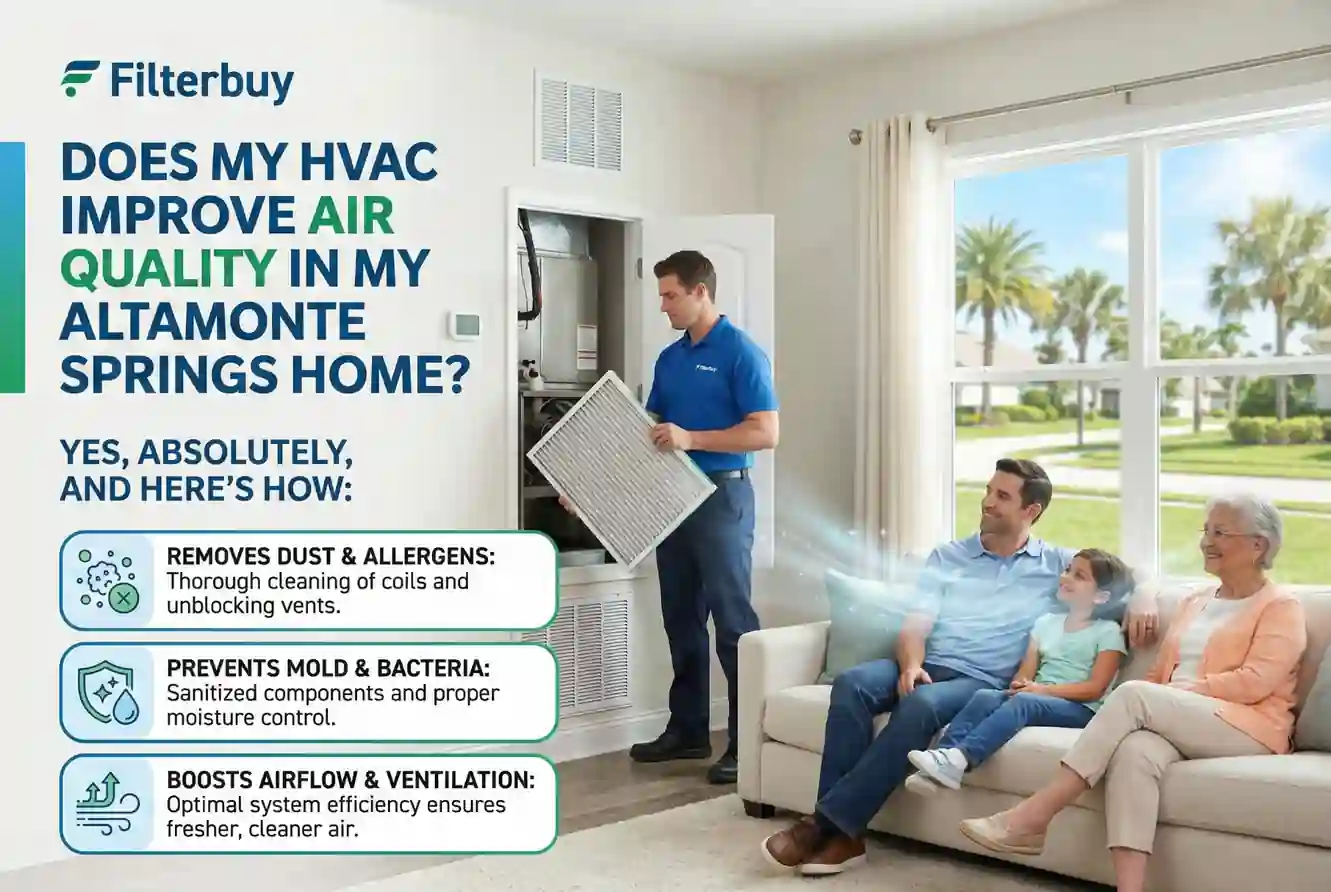
"After years of service calls in Altamonte Springs, the air quality issues we find most often aren't mysterious — they trace directly back to a coil that needed cleaning, a drain line that needed clearing, or a filter that was bypassing instead of filtering. None of those are dramatic failures. They're the predictable result of a system running 10 to 11 months straight in Central Florida humidity without a proper tune-up. The homes where families tell us the air just feels different — cleaner, less stuffy, easier to breathe — are almost always the homes where we got in before peak season, not after. That's not a coincidence. That's maintenance doing exactly what it's supposed to do."
Essential Resources
1. Confirm Your Contractor Is Legally Authorized to Work in Florida Before You Book
Florida DBPR Contractor License Verification | MyFloridaLicense.com This is the first check we recommend to every Altamonte Springs homeowner — bar none. Florida law requires all HVAC contractors to hold a current, active state license before performing any work, and this official DBPR portal lets you verify that status in under a minute before anyone touches your system. https://www.myfloridalicense.com/wl11.asp
2. Verify Your Technician's Field Competency Before Peak Season Locks Out the Best Providers
NATE Technician ID Verification | North American Technician Excellence NATE certification is the credential we hold our own technicians to — because it reflects real-world working knowledge, not just training hours logged. Use this official verification tool to confirm any technician's active certifications before the February–March booking window tightens and qualified providers fill their schedules. https://natex.org/contractor/verify-a-nate-id
3. Know the Federal Benchmark for What a Pre-Season Tune-Up Should Actually Include
ENERGY STAR Maintenance Checklist | U.S. Environmental Protection Agency This is the independent, government-backed checklist we recommend Altamonte Springs homeowners keep on hand when evaluating any provider's scope of work. If a contractor's tune-up checklist falls significantly short of what ENERGY STAR defines as a complete pre-season visit, that gap tells you something important before you book — not after. https://www.energystar.gov/saveathome/heating-cooling/maintenance-checklist
4. Understand the Specific Tasks That Determine Whether Your System Enters Peak Season Prepared or Compromised
Air Conditioner Maintenance Guide | U.S. Department of Energy After years of servicing Central Florida homes, we can confirm that the tasks the DOE identifies here — verified refrigerant charge, measured airflow, inspected electrical connections — are precisely what separates a tune-up that genuinely protects your system from one that simply generates a receipt. Read this before scheduling any pre-season visit in Altamonte Springs. https://www.energy.gov/energysaver/air-conditioner-maintenance
5. Understand Why Central Florida's Humidity Makes Maintenance Timing More Critical Than Any National Guideline Accounts For
Humidity & HVAC Performance in Central Florida | Florida Solar Energy Center / University of Central Florida This is the local research that validates what we observe in Altamonte Springs homes every week. UCF's Florida Solar Energy Center has studied how Central Florida's persistent humidity directly accelerates HVAC performance degradation — the peer-reviewed scientific context behind why timing your tune-up for February or March matters more here than anywhere else in the country. http://www.fsec.ucf.edu/en/consumer/buildings/basics/humidity.htm
6. Know Seminole County's HVAC Permit Requirements Before Any Work Beyond a Tune-Up Begins
Seminole County Building Division — HVAC Permits & Contractor Registration | Seminole County FL We keep this resource bookmarked because our Altamonte Springs customers deserve to understand the local regulatory framework governing HVAC work in their homes. Seminole County's Building Division outlines contractor registration requirements, permit thresholds, and inspection processes — the local rules that protect you when any work goes beyond routine maintenance. https://www.seminolecountyfl.gov/departments-services/development-services/building
7. Know Your Rights and Your Recourse as an Altamonte Springs Homeowner Before You Need Them
Contractor Hiring Guidelines & Complaint Process | City of Altamonte Springs Building & Fire Safety Department This is the resource we wish every homeowner in our community had read before a bad experience — not after. The City of Altamonte Springs Building and Fire Safety Department outlines your rights as a homeowner, local HVAC work thresholds, and the official complaint process for substandard or unlicensed contractor work. Know this before the busy season begins, not during it. https://www.altamonte.org/faq.aspx?TID=16
These trusted state, federal, and local resources support homeowners with guidance tailored to different types of HVAC systems, helping ensure each system receives the proper licensing oversight, certified expertise, climate-specific maintenance timing, and regulatory compliance needed for reliable performance and long-term efficiency.
Supporting Statistics
We don't lead with statistics on service calls. We lead with what we find on the equipment. But when homeowners ask why a tune-up matters for the air their family breathes — not just their energy bill — these are the numbers we come back to. Federal and national health research has documented what we've been observing in Altamonte Springs homes for years.
Americans spend approximately 90% of their time indoors — where pollutant concentrations are often 2 to 5 times higher than outdoors.
The EPA puts a number on something we see the consequences of every week. Indoor air is frequently more polluted than the outdoor air most homeowners worry about. The people most susceptible — the very young, older adults, and those with respiratory or cardiovascular conditions — tend to spend even more time indoors than average.
What that means in a Central Florida home specifically:
Your system runs 10 to 11 months per year — it is the primary mechanism controlling what your family breathes
A clean, calibrated system actively reduces what circulates in that environment
A fouled coil, blocked drain line, or compromised filter does the opposite — distributing contaminants with every cycle
The families most vulnerable to indoor air quality degradation spend the most time inside the home your system is either protecting or compromising
We've walked into Altamonte Springs homes where a homeowner couldn't identify anything wrong — no visible mold, no obvious odor, no system failure — and found coil and drain line conditions that explained every respiratory complaint their family had been attributing to seasonal allergies. The 90% statistic isn't abstract. It describes what's happening inside your home every day your system runs without proper maintenance.
Source: U.S. Environmental Protection Agency — Indoor Air Quality Report on the Environment https://www.epa.gov/report-environment/indoor-air-quality
Building dampness and mold have been directly linked to respiratory symptoms, asthma, hypersensitivity pneumonitis, bronchitis, and respiratory infections.
The CDC's National Institute for Occupational Safety and Health documents the full clinical picture — well beyond the stuffy nose most homeowners associate with indoor air quality issues. We reference this research specifically because of what we find on drain line and coil inspections throughout Seminole County.
What that pattern looks like from our side of the service call:
A partially blocked drain line creates standing water inside the air handler within days in this climate
Standing water inside an air handler is the exact condition the CDC identifies as a driver of mold and microbial growth
That growth gets distributed through every supply vent with every operating cycle
In a system running February through December, accumulation timelines are compressed in ways seasonal maintenance schedules don't account for
The CDC's primary prevention recommendation is keeping indoor humidity below 50%. In Altamonte Springs, your properly maintained HVAC system is what makes that possible. When maintenance is deferred:
Humidity control fails gradually and quietly
Biological conditions the CDC research documents begin developing
Symptoms appear on a timeline the homeowner rarely connects to the equipment
Source: CDC / National Institute for Occupational Safety and Health — Respiratory Disease from Exposures Caused by Dampness https://www.cdc.gov/niosh/docs/2013-102/default.html
Indoor pollutant levels may be 2 to 5 times — and occasionally more than 100 times — higher than outdoor levels.
EPA studies establish this range as the documented reality for many American homes. We return to this statistic when homeowners tell us their air quality seems fine — because in this climate, indoor air quality degradation is almost never something a homeowner notices until it has been building for months.
The pattern we document consistently in Altamonte Springs homes where maintenance has been deferred:
Evaporator coils accumulating biological growth invisible from any accessible vantage point
Blower components distributing that accumulation through the duct system with every cycle
Filters that have exceeded their effective service life circulating what they should be capturing
Indoor humidity drifting above the threshold where dust mites and mold thrive — gradually, without a single obvious failure event
The result we see consistently:
Families reporting the air feels genuinely different after a tune-up
Technicians documenting coil and drain line conditions that meet the EPA's clinical definition of indoor air quality risk
That correlation is not a coincidence — it reflects exactly what federal research predicts and what a properly performed tune-up in this climate is designed to prevent
Source: U.S. Environmental Protection Agency — Why Indoor Air Quality is Important https://www.epa.gov/iaq-schools/why-indoor-air-quality-important-schools
EPA and CDC data underscore why a top HVAC system tune up is essential in a long-running cooling climate — proactively cleaning coils, clearing drain lines, optimizing airflow, and stabilizing humidity levels to prevent biological buildup and protect the air your family breathes every day.
Final Thought & Opinion
We've cleaned enough evaporator coils, cleared enough blocked drain lines, and had enough conversations with Altamonte Springs homeowners about unexplained respiratory symptoms to have a perspective on this that goes beyond what any checklist or federal guideline can fully capture.
So here it is — straight from the field.
Most indoor air quality problems in Altamonte Springs homes aren't mysterious. They're predictable. And they're almost always connected to an HVAC system that needed attention before peak season — not during it.
The pattern repeats itself throughout Seminole County with a consistency that stopped surprising us years ago. A family moves into a home. The system runs. Life gets busy. Maintenance gets deferred — not out of negligence, but because the system keeps cooling and nothing obvious breaks. Meanwhile, the coil accumulates biological growth in humidity that never really lets up. The drain line develops a partial blockage that creates standing water nobody can see. The filter passes its effective service life and starts circulating what it should be capturing.
Nobody notices. Until someone does.
It shows up as allergy symptoms that seem worse indoors than outside. As a musty quality to the air that cleaning doesn't resolve. As a child's asthma that flares without an obvious trigger. As fatigue that the family attributes to everything except the air they've been breathing for months in a home where the HVAC system has been quietly distributing what accumulated on components nobody checked.
Here's the opinion part — and it's one we hold firmly after years of this work.
The HVAC industry has done a poor job of communicating what a tune-up actually does for indoor air quality. Most marketing around HVAC maintenance focuses on energy savings, equipment longevity, and avoiding breakdown costs. Those are real benefits. But in a climate like Altamonte Springs — where the system runs nearly year-round, where humidity creates biological growth conditions that don't exist in seasonal climates, and where 90% of the time your family spends at home is time spent breathing whatever that system is circulating — the air quality dimension is the one that matters most to the families we serve.
Energy savings are measurable on a bill. A system breakdown is an obvious event with an obvious cost. But the air quality consequences of deferred maintenance in this climate are diffuse, gradual, and easy to attribute to something else entirely — until a technician opens the air handler and shows a homeowner what's been living on their evaporator coil.
We've had that conversation more times than we can count. It changes how people think about maintenance.
Not because we scared them. Because we showed them something real — something that explained symptoms their family had been managing for months — and then we fixed it. Coil cleaned. Drain line cleared. Filter assessed and replaced. System verified for humidity control within designed parameters. And a family that called us for a tune-up left the experience understanding that what we did that morning had more to do with what their family breathes than with what their system costs to run.
That's the perspective we bring to every service call in this community. And it's the standard we'd apply to any provider we'd recommend to our own families.
The best HVAC providers in Altamonte Springs don't just maintain equipment. They understand that in Central Florida's climate, a properly performed tune-up is one of the most direct interventions available for the health of the indoor environment your family lives in every day. They show up with credentials you can verify, a checklist you can evaluate, and findings they communicate in terms of what those findings mean for your home — not just your system.
That combination isn't common. But it's the right standard. And it's the one every Altamonte Springs homeowner deserves to expect before anyone opens their air handler.
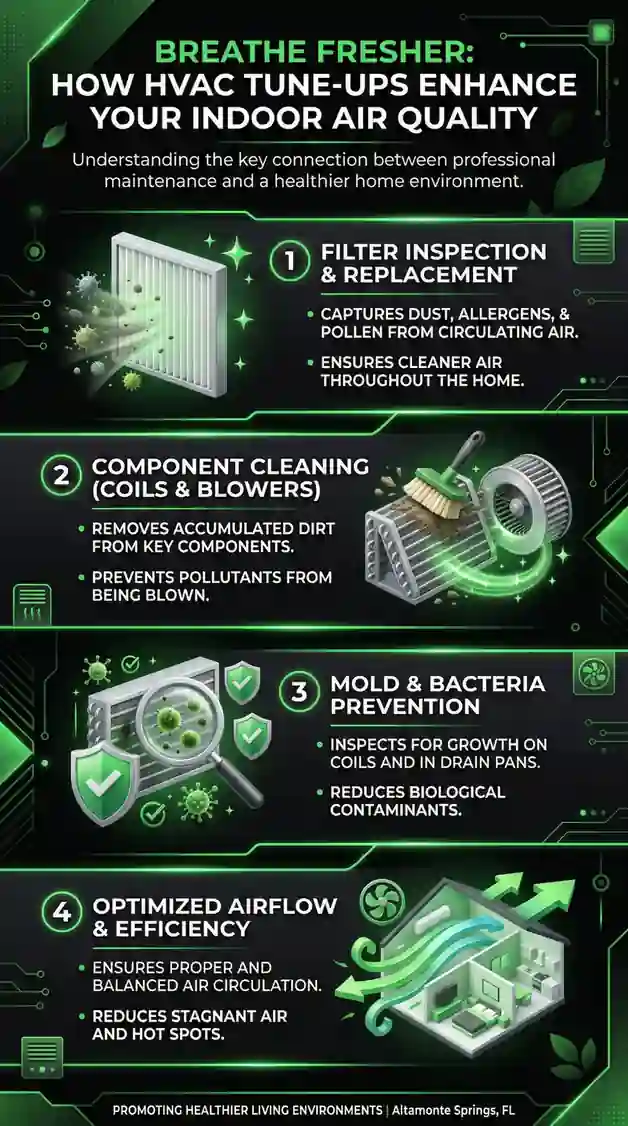
FAQ on HVAC Tune-Up Air Quality in Altamonte Springs FL
Q: Does an HVAC tune-up actually improve indoor air quality in my Altamonte Springs home?
A: Yes — and in this climate, the air quality impact often surprises homeowners more than the energy savings do.
What a properly performed tune-up directly addresses:
Coil cleaning removes biological growth distributed into living spaces with every operating cycle
Drain line clearing eliminates standing water conditions driving microbial growth inside the air handler
Filter assessment corrects bypass conditions allowing contaminants to deposit directly on the coil
Blower cleaning removes accumulated contamination circulated through every room with every cycle
Humidity verification confirms the system maintains the below-50% threshold the CDC identifies as essential for mold and dust mite prevention
What we find on service calls in Altamonte Springs:
Families managing respiratory symptoms for months — blaming seasonal allergies
Evaporator coil and drain line conditions telling a different story entirely
A tune-up that changed what their family was breathing every day
That's the part most HVAC content doesn't say directly.
Q: How does Central Florida's humidity specifically affect indoor air quality in my home?
A: Faster and more directly than most homeowners expect — and faster than any national maintenance schedule accounts for.
What we document on unmaintained systems throughout Seminole County:
Coil surfaces accumulate biological growth at a rate that doesn't exist in seasonal climates
Drain lines face continuous condensation with no recovery period between operating seasons
A partially blocked drain line creates standing water and mold conditions inside the air handler within days
Indoor humidity above 50% creates the exact environment where dust mites and mold establish and spread
What deferred maintenance leads to:
Humidity control fails gradually and quietly
Biological conditions develop inside the air handler
Symptoms appear on a timeline most homeowners never connect to their equipment
The CDC's primary prevention recommendation is keeping indoor humidity below 50%. In Altamonte Springs, your properly maintained HVAC system is what makes that number achievable. When maintenance is deferred, that connection only becomes clear when we show homeowners what's on the coil.
Q: What are the signs that my HVAC system is negatively affecting my home's air quality?
A: After years of service calls in this area, these are the indicators we hear most consistently from homeowners before they called us:
Allergy or respiratory symptoms worse indoors than outside
Musty or stale odors that cleaning doesn't resolve
Dust returning to surfaces faster than it should
Humidity that never feels under control despite the AC running constantly
Family members with asthma experiencing more frequent indoor symptoms
Visible dust discharge from supply vents
What makes this especially difficult in Altamonte Springs:
Every symptom develops gradually
By the time symptoms are undeniable, conditions have been building for months
Homeowners who catch it earliest scheduled in February
Homeowners who waited until symptoms were undeniable called us in July instead
Q: How often should I schedule an HVAC tune-up for air quality in my Altamonte Springs home?
A: At minimum once annually — but timing matters more than frequency in this climate.
The schedule we recommend to our own neighbors:
Primary visit: February or March — before peak season, highest technician availability, system fully assessed before 10 months of continuous operation begins
Secondary visit: October or November — post-season check after months of continuous humidity and cooling load exposure
Why two visits reflects this climate's reality:
Systems run 10 to 11 months continuously
Coil buildup, drain line stress, and filter contamination accumulate faster than one annual visit addresses
Homes on a two-visit schedule show measurably better coil condition and cleaner drain lines
Homes on a single annual schedule show the difference on the components
Families feel it in the air
Q: What should I look for in an HVAC provider who takes indoor air quality seriously near Altamonte Springs FL?
A: Providers who genuinely understand the air quality dimension demonstrate it before anyone arrives at your home.
Before the visit — look for:
Written checklist includes coil cleaning, drain line inspection, and filter assessment as standard scope — not add-ons
Guaranteed pricing confirmed before arrival
NATE certification and Florida DBPR license verified without hesitation
During the visit — look for:
Evaporator coil cleaned as standard scope — never a separate line item
Drain line inspected and cleared on every visit regardless of visible symptoms
Filter condition, fit, and MERV rating assessed — not just whether a filter is present
System humidity performance checked and documented
Findings communicated in terms of your indoor environment — not just equipment efficiency numbers
What the response tells you:
Provider meets all criteria without prompting = air quality focused standard of care
Provider treats coil cleaning or drain line service as an add-on = equipment-focused standard of care
We built our own service standard around these same criteria. That combination isn't universal in this market. It should be — and it's the standard every Altamonte Springs homeowner deserves to expect.
In Does My HVAC Tune-Up Improve Air Quality in My Altamonte Springs Home?, we explain that a tune-up improves air quality when it restores the system’s “air-moving” fundamentals, clean coils, clear drainage, correct airflow, and the right filtration for your setup so the system can actually capture particles and manage humidity instead of just running longer. That’s why pairing a tune-up with the right filter choice matters, whether you’re using a 16x25x4 MERV 13 pleated furnace filter for higher-efficiency particle capture , stocking up on a 20x25x1 MERV 8 pleated HVAC air filters 6-pack to keep airflow consistent through frequent changes , or confirming compatibility with a finer option like a 20x23x1 MERV 11 pleated HVAC air filter when your system can handle the added resistance , because the cleanest indoor air gains come from tune-up work and filtration working together, not separately.